Nigeria’s Petrol Imports Drop After Dangote Partners with Marketers
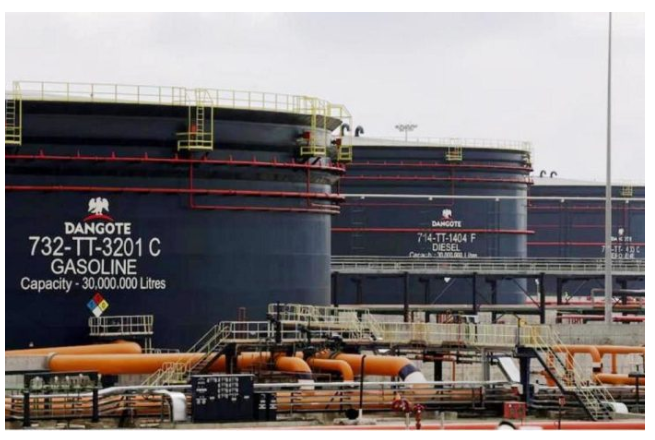
Nigeria’s petrol market is entering a new era, one defined not by foreign cargoes cruising in from Malta or the Mediterranean, but by vessels lifting product right here at home, directly from the Dangote Petroleum Refinery’s Lekki coastline. The shift is quiet but unmistakable, and it is reshaping the downstream sector more rapidly than industry observers anticipated.
For decades, the country’s PMS lifeline stretched across the ocean. Today, that cord is loosening. According to BusinessDay, petrol imports from Malta have plunged by 60 percent, collapsing from over $2.1 billion in 2023 to roughly $818 million in 2024. Malta once a mysterious midpoint for Nigerian-bound cargoes is losing relevance because Nigeria finally has a refinery producing at scale, on schedule, and with willing partners across the distribution chain.
Fresh tanker movements tell the story even more vividly. In November alone, vessels such as Mosunmola, Princess Oge, Binta Saleh, Stellar and Bora all loaded PMS at Dangote and sailed directly to Nigerian depots. Their arrival and berth dates are clear markers of a new logistics pattern: shorter voyages, reduced demurrage, and a downstream market that no longer waits anxiously for Mediterranean shipments.
A Strong, Expanding Network Driving Domestic Supply
Behind this momentum is a broadening alliance of depot owners and marketers who have entered structured supply agreements with the refinery. The original network includes 20 major players:
AA Rano, AYM Shafa, Salbas, Northwest, Rainoil, Ardova, Optima, Masters Energy, Bovas, Dan Marna, NIPCO, Pinnacle, Heyden, Sunbeth, Mainland, NEPAL, MRS, Conoil, NNPC Retail and TotalEnergies.
Now joined by 11 newly admitted marketers and depots, the consortium has evolved into a nationwide force:
Sobaz, Acurate Global, Triumph Golden, SIFEM, Request, Soroman, Alkanes, Eterna Plc, NU Synergy, Jesco and Pivot Energy.
With this expanded coalition, Dangote now has a direct channel into virtually every major depot corridor from Apapa and Ibafon to Oghara, Warri, Port Harcourt and Calabar. In simple terms, the refinery is not just producing PMS; it is moving it purposefully into the arteries of the market.
Vessel tracker from Petroleumprice.ng confirms:
MOSUNMOLA (NIPCO / Ardova / TotalEnergies — Lagos): Arrival 13 Nov; Berth 19 Nov; Loaded at Dangote Refinery
PRINCESS OGE (Rainoil— Lagos): Arrival 20 Nov; Berth 22 Nov; Loaded at Dangote Refinery
LESTE (Bovas— Lagos): Arrival 24 Nov; Berth not specified; Loaded at Dangote Refinery
BINTA SALEH (Sunbeth — Lagos): Arrival 20 Nov; Berth 21 Nov; Loaded at Dangote Refinery
BORA (Soroman — Calabar): Arrival 15 Nov; Berth 15 Nov; Loading at Dangote Refinery
STELLAR (Alkanes — Calabar): Arrival 20 Nov; Berth 21 Nov; Loaded at Dangote Refinery
These ships tell a story of domestic refining taking centre stage. They also demonstrate the logistical discipline that was previously missing from Nigeria’s PMS supply movements.
Dangote’s Reaction on Market Price Movements
The turning point in recent pump price changes came after Dangote Refinery made a decisive adjustment in early November. According to a press statement by Dangote Refinery, the company clarified:
“The recent reduction in PMS pump prices nationwide was a direct response to our price cut on 6 November. It was not caused by the temporary reversal of the 15% import tariff.”
In that same statement, the refinery emphasised that it had reduced its PMS gantry price from ?877 to ?828, and its coastal price from ?854 to ?806, insisting that marketers simply adjusted accordingly.
A voyage from Lekki to Calabar takes da